

No ceremonial Tamil meal is ever complete without Kootu. For that matter, no ceremonial Tamil meal in the past was complete without two-dozen dishes placed at their respective locations on a huge Thalavaazhailai (Banana Leaf), freshly cut from the backyard and glistening with droplets of water. Today, we lack the Vaazhailai and the backyard and have to be content with distant dreams from the past. However, the dishes have lived on, twisted and tested according to personal tastes, handed down in families, only to make appearances at festive occasions and celebrations.
Kootu is one such dish, that is inherently Dravidian in its origins. Literally meaning 'to add', Kootus are delightful lentil-vegetable combinations, subtly spiced with the choicest of ingredients. They are thicker than Sambhars and are either eaten with just hot white rice or are aptly paired with Kaara Kuzhambu, Puli Kuzhambu or Vatral kuzhambu and rice. Our ancestors, who were expert nutritionists apart from a zillion other things, encouraged the latter combination, as the Kuzhambus and rice provided the vitamins, minerals, carbohydrates and fats, while the lentils in the Kootus served as an excellent source of proteins that are often found to be lacking in vegetarian diets. The combinations of lentils and vegetables are virtually uncountable, but hitting the "made-in-the-heaven mix-match" of the two ingredients, to make the many salivating Kootus that we know today, is a feat that must be duly attributed to our brilliant ancestors. Perhaps that's why the Kootus always find a place on our Wedding Menus.
The recipe for Muttaikos Arachuvitta Kootu that we are going to drool over today is my submission for my first-ever Blogging Marathon. My theme for this week happens to be 'Kootus prepared in Tamil Households'. Hosted by Srivalli of Spice Your Life, the Blogging Marathon has seen 27 successful editions and I am pleasantly excited to be a part of Blogging Marathon #28. Here's to many more successful marathons by me and other participants alike. Now onto the recipe.
MUTTAIKOS ARAICHUVITTA KOOTU (Serves 3-4)
Set-up Time : 15 minutes
Set-up Time : 15 minutes
Experiment Run-Time : 30 minutes
The Shopping List
Set 1: At the Chopping Board
Cabbage : 1 medium, shredded
Onion : 1 Large, sliced thinly
Set 2: Kootu Podi
Grated Coconut : 1/2 cup
Cumin Seeds : 1 Tbsp
Coriander Seeds : 2 Tbsp
Whole Peppercorns : 1 Tbsp
Dried Red Chilies : 4 or 5
Set 3: Protein Base and Seasoning
Bengal Gram Dal/Chana Dal : 3/4 Cup
Mustard Seeds : 1 tsp
Turmeric Powder : 1/2 Tsp
Asafotida : a generous pinch
Dried Red Chilies : 1, broken
Curry Leaves : 1 strand
Vegetable Oil : 1 Tbsp
Fresh Coriander Leaves : For garnishing
Salt : As required
Methodology
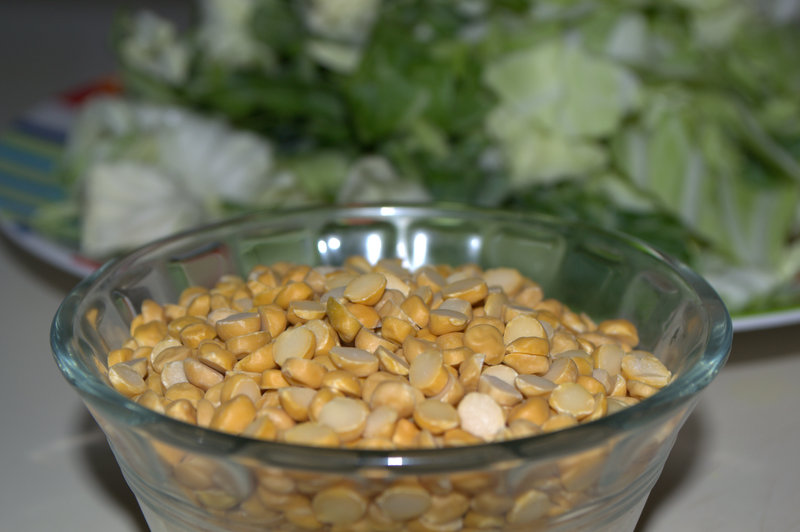
1. Place the Chana Dal in a pressure cooker along with 2.5 cups of water, turmeric powder and sufficient salt. Pressure cook the dal for up to 5 whistles. Chana Dal takes longer to cook compared to other dals and may prove to be one hard nut to crack, if not fully done.
Once the pressure is relieved, open the cooker and mash the Dal haphazardly, with the help of a sturdy churning rod. Keep the Dal aside.
Once the pressure is relieved, open the cooker and mash the Dal haphazardly, with the help of a sturdy churning rod. Keep the Dal aside.
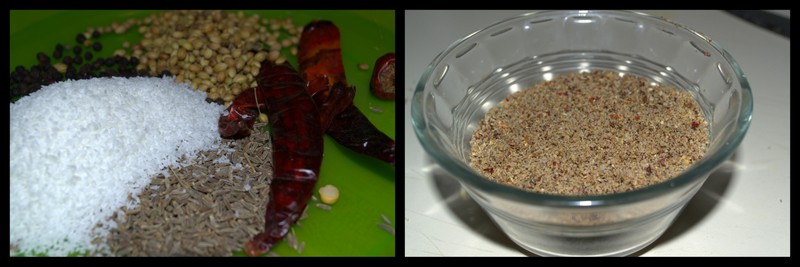
2. In a separate pan, dry roast all the ingredients given under Set 2, adding the grated coconut at the very end. Once the coconut is slightly roasted, remove the pan from heat. Grind the spices, on cooling, to obtain the fragrant Kootu Podi (powder). This powder can be made in advance and stored for up to a few weeks.
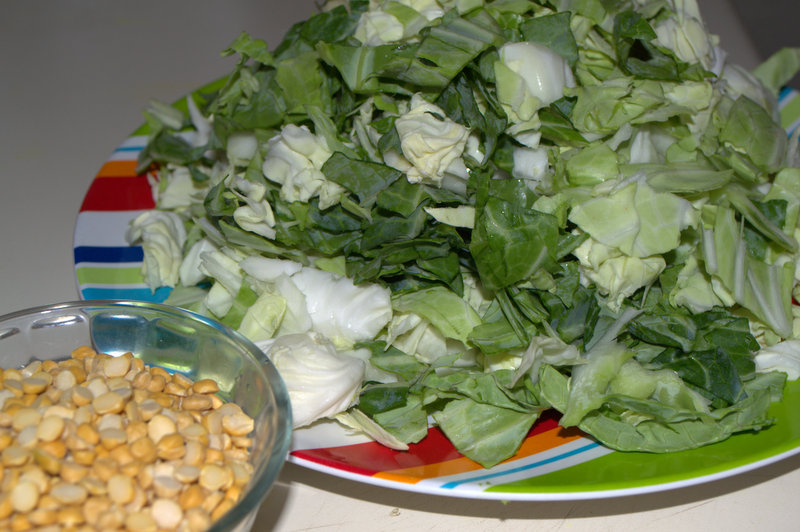
3. Now, add the shredded cabbage and salt to the same pan and gently sauté the leaves. Cabbage gives off water when it cooks, so there is no need to add any additional water for cooking.
After about 6-7 minutes, tip in the mashed Dal into the cabbage and allow the mixture to come to a boil. A little water maybe added to adjust to the desired consistency.
4. When the Dal-Cabbage mixture is on the verge of boiling, add the Kootu podi and mix well. Allow the mixture to boil for an additional 3-4 minutes and turn the heat off.
5. In a smaller pan, heat some oil and add all the seasonings one by one, starting with asafoetida, mustard seeds, red chilies, and curry leaves. Once the cracking subsides, add the onions and sauté until they turn translucent. Quickly pour the seasonings over the Kootu and give one final mix. Garnish with some fresh coriander leaves and serve hot with white rice, ghee, and spicy Kaara Kuzhambu.
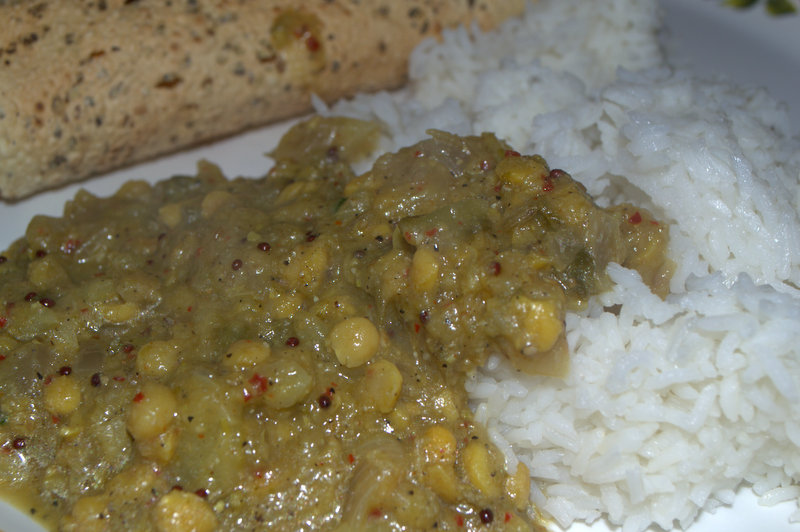
The specialty of an Araichuvitta Kootu is the very fact that the masala is freshly ground prior to its preparation. The aroma and fragrance imparted by the freshly ground masala are on a different plane altogether, in comparison with the store-bought Sambhar and Rasam Podis, that are invariably stacked up on our shelves. I love to eat this Kootu with papad and rice. Sometimes, I increase the spice-level by several notches with the addition of extra-doses of peppercorns and dried red chilies. The resultant Kootu forms a heavenly combination with curd-rice. I am so fond of it, that my brain no longer registers the ingredient measurements for the regular Kootu, and my friends are often left gasping for water, when they mix it with Kaara Kuzhambu. Hilarious! But rest assured, the portions given above yield a perfectly mild-spice Kootu. One that I am sure you can enjoy with both Kuzhambu and Thacchu Mammam alike.


